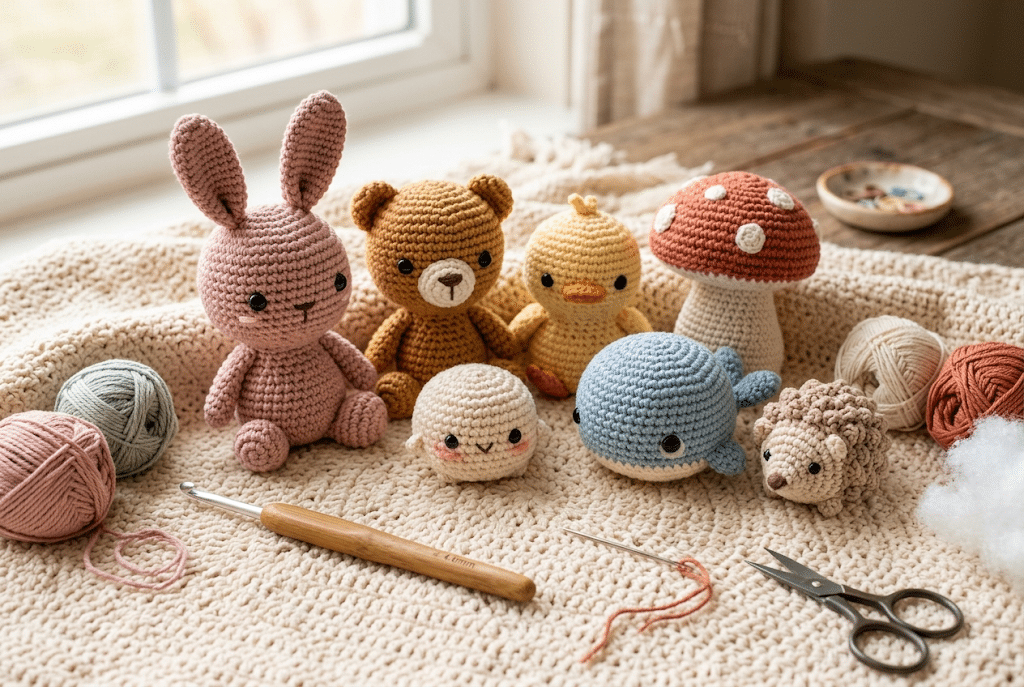
If you’ve ever seen a tiny crocheted animal, food character, or cute little plushie online and wondered what is amigurumi, you’re in the right place. Amigurumi is one of the most fun and approachable ways to enjoy crochet.
These small stuffed creations have become incredibly popular on Pinterest, TikTok, Instagram, and craft blogs. In 2026, beginners can find thousands of adorable patterns, video tutorials, and colorful yarn ideas online.
The best part? You don’t need years of crochet experience to get started.
With a few basic supplies and some simple techniques, you can make your first tiny bear, bunny, mushroom, whale, or even a miniature food character.
Let’s explore what amigurumi is, where it came from, what makes it different from regular crochet, and how you can start making your own.
Table of Contents
What Is Amigurumi? A Simple Definition
Amigurumi is the art of crocheting or knitting small, stuffed three-dimensional objects.
The word comes from Japanese. It combines ami, meaning crocheted or knitted, with nuigurumi, meaning stuffed doll or toy.
Most amigurumi today are made with crochet, although knitted versions also exist.
Unlike flat crochet projects such as blankets or scarves, amigurumi usually creates a three-dimensional shape. You crochet pieces such as a head, body, ears, legs, or wings and then join them together.
Common amigurumi designs include:
- Cute animals
- Kawaii characters
- Dolls and people
- Food and desserts
- Plants and flowers
- Fantasy creatures
- Keychains and bag charms
- Seasonal decorations
Amigurumi is especially popular because the finished projects are small, cute, and highly customizable.
You can change the colors, facial expressions, accessories, and sizes to create something that feels completely your own.
What Does “Amigurumi” Mean?
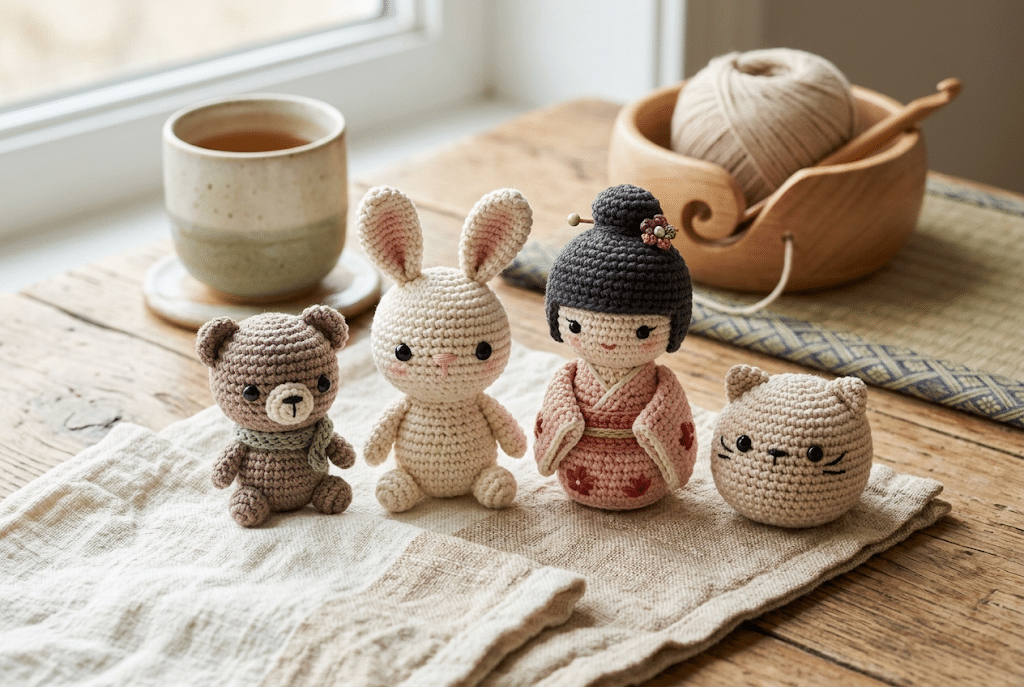
The amigurumi meaning is closely connected to Japanese handmade doll-making traditions.
The term refers broadly to crocheted or knitted stuffed objects. However, modern amigurumi has developed into a recognizable craft style of its own.
Many designs have a cute, rounded appearance. This is often associated with the Japanese concept of kawaii, which means cute or lovable.
That does not mean every amigurumi piece has to look Japanese or cartoon-like.
You can make realistic animals, simple toys, whimsical creatures, seasonal decorations, or practical objects.
In short, amigurumi describes a technique and style rather than one specific type of toy.
Amigurumi vs. Regular Crochet: What’s the Difference?
If you already know how to crochet, you may wonder why amigurumi feels different.
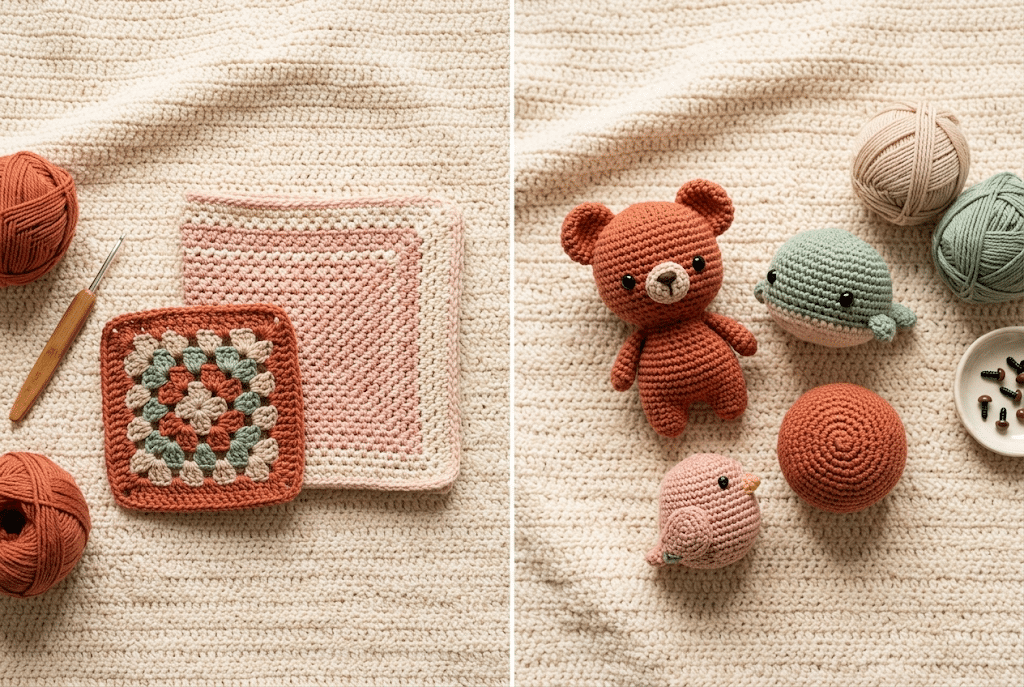
The basic crochet stitches are often the same. The biggest difference is how those stitches are used to create shapes.
Regular crochet projects can be flat or three-dimensional. Blankets, scarves, dishcloths, and granny squares are common flat projects.
Amigurumi, however, usually involves crocheting tightly in the round.
Here’s a simple comparison:
| Regular Crochet | Amigurumi |
|---|---|
| Often worked in rows | Usually worked in rounds |
| Can create flat fabric | Creates 3D shapes |
| May use larger hooks | Often uses smaller hooks |
| Many fabric types are possible | Usually tightly stitched |
| Stuffing is uncommon | Stuffing is usually essential |
| Projects can be large | Projects are often small |
Amigurumi crochet also tends to use tight stitches. This helps prevent stuffing from showing through the fabric.
So, if you already know single crochet, you have a great foundation for learning amigurumi.
A Brief Amigurumi History
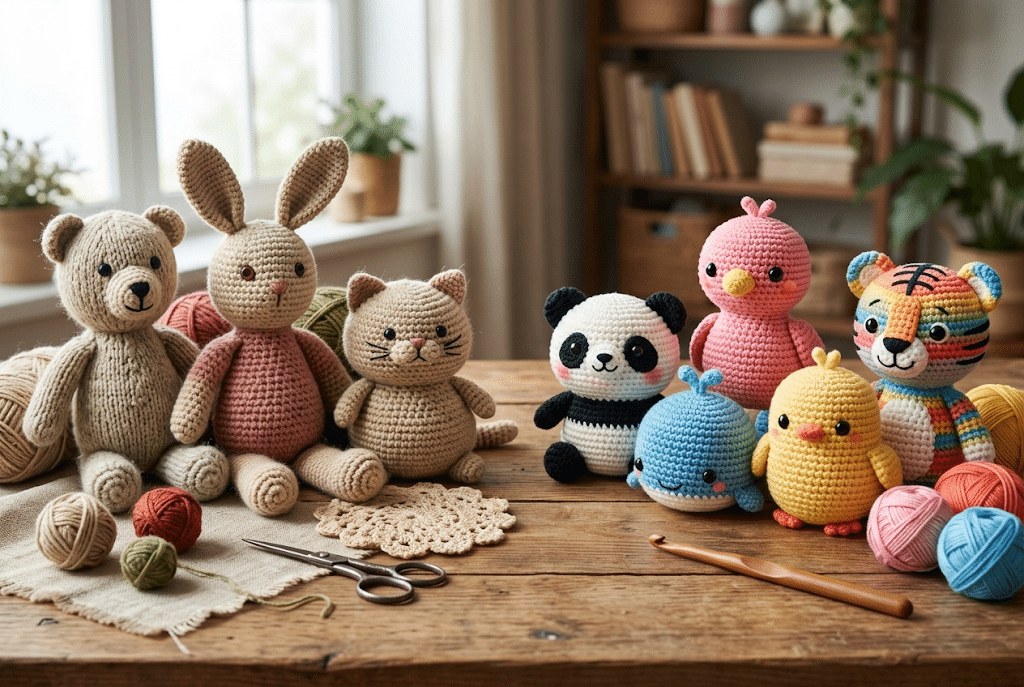
Amigurumi has Japanese roots, although the exact development of the modern craft is difficult to trace to one single moment.
Japan has a long history of handmade dolls and decorative figures. Crochet and knitting became more widely practiced there over time, eventually contributing to the development of modern amigurumi.
The craft became especially popular internationally during the late 20th and early 21st centuries.
Online crochet communities played a major role in its growth.
Patterns could suddenly be shared with makers around the world. Websites, blogs, online marketplaces, Pinterest, and social media helped tiny crocheted characters reach a much larger audience.
Today, amigurumi is enjoyed by crocheters of all ages and skill levels.
The designs have also expanded far beyond traditional doll shapes. You can now find patterns for almost anything imaginable.
Why Is Amigurumi So Popular in 2026?
There are several reasons amigurumi continues to attract new crocheters.
1. Projects are usually small
You don’t need to spend weeks making a giant blanket.
Many amigurumi projects can be completed in a few hours or several crafting sessions.
2. They’re perfect for gifts
A handmade crochet animal can feel much more personal than a mass-produced toy.
Small designs also make lovely:
- Birthday gifts
- Baby gifts
- Stocking stuffers
- Teacher gifts
- Bag charms
- Desk decorations
- Handmade keepsakes
3. You can use leftover yarn
Many small projects require only a small amount of each color.
That makes amigurumi a fantastic way to use leftover yarn from previous projects.
4. The possibilities are endless
Once you understand the basic shapes, you can experiment with your own designs.
A simple crocheted ball can become a head, fruit, animal body, ornament, or character.
Amigurumi Supplies: What Do You Need?
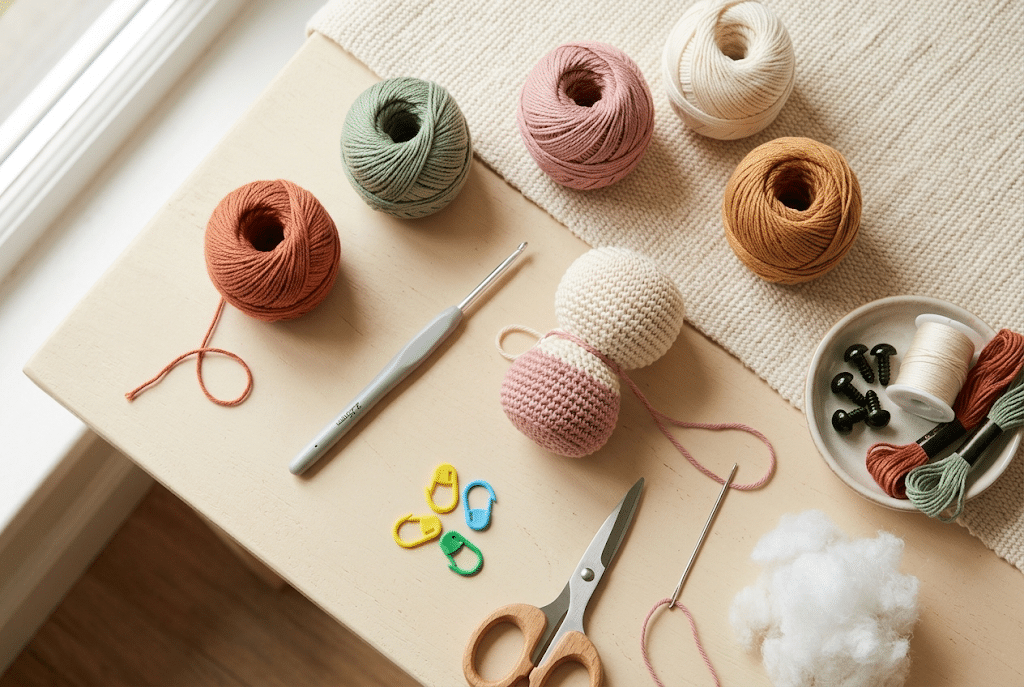
You don’t need a huge collection of tools to begin.
Here are the basic supplies worth having.
Yarn
Choose a smooth yarn that makes your stitches easy to see.
Cotton yarn is especially popular for amigurumi because it gives projects a neat, defined appearance.
Acrylic yarn can also work well and is often budget-friendly.
For your first project, avoid extremely fuzzy yarn. It can make it difficult to see where you need to insert your hook.
Crochet Hook
Amigurumi usually uses a smaller hook than the yarn label might recommend.
A tighter fabric is useful because it keeps stuffing from showing.
The exact hook depends on your yarn and pattern. Always follow the pattern’s recommended size when possible.
Stuffing
You’ll need polyester fiberfill or another suitable toy stuffing.
Stuff the project gradually as you crochet.
Adding too much stuffing at once can stretch the stitches and change the shape.
Safety Eyes
Safety eyes are small plastic eyes designed for stuffed toys.
They can give animals and characters a polished appearance.
However, they are not always suitable for babies or very young children. For those projects, embroidered eyes are often a safer option.
Other Helpful Supplies
You may also want:
- Stitch markers
- Tapestry needle
- Scissors
- Row counter
- Pins
- Embroidery thread
- Small amounts of contrasting yarn
You can start with a very basic toolkit and add supplies as your skills grow.
Basic Techniques Every Beginner Should Know
Learning a few techniques will make many beginner projects much easier.
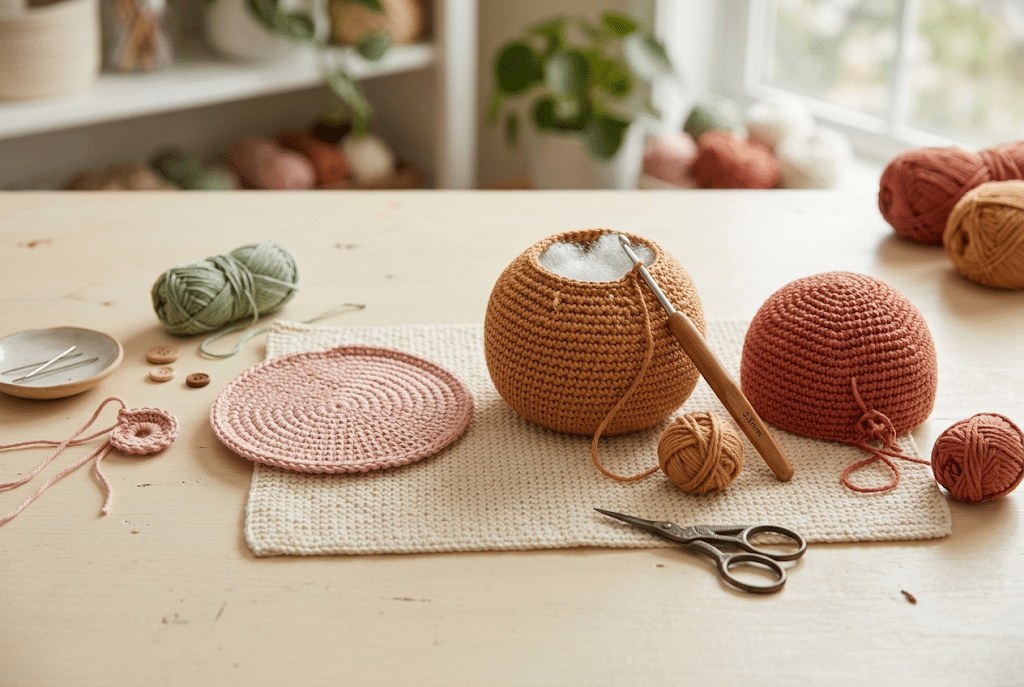
Magic Ring
A magic ring creates a small adjustable circle at the beginning of many amigurumi projects.
It is commonly used when starting the head, body, or other rounded pieces.
Don’t worry if it feels awkward at first.
The magic ring is one of those skills that often becomes much easier after a few attempts.
Single Crochet
Single crochet is one of the most important stitches in beginner amigurumi.
Many patterns use single crochet throughout the entire project.
Because amigurumi needs a firm fabric, single crochet is particularly useful.
Increases
An increase adds stitches to a round.
For example, you might crochet two single crochets into the same stitch.
Increasing allows your piece to grow wider.
Decreases
A decrease reduces the number of stitches.
Decreases are commonly used to shape heads, bodies, limbs, and other rounded pieces.
Together, increases and decreases let you control the shape of your project.
Working in the Round
Instead of turning your work at the end of every row, many amigurumi patterns are worked continuously around the piece.
A stitch marker can help you keep track of where each round begins.
If you’re new to crochet, this may feel strange at first. With practice, it becomes second nature.
How to Make Amigurumi as a Beginner
Learning how to make amigurumi is easier when you break the process into small steps.
Start with a simple pattern rather than an advanced character with dozens of tiny pieces.
A typical beginner project may follow this process:
- Choose a beginner-friendly pattern.
- Gather the recommended yarn and hook.
- Learn the stitches used in the pattern.
- Make the starting magic ring.
- Crochet the first rounds.
- Use increases to create the shape.
- Add stuffing as the piece grows.
- Use decreases to close the shape.
- Attach the separate pieces.
- Add facial details and finishing touches.
Don’t worry about making everything perfect.
Your first amigurumi may have slightly uneven stitches or a funny expression. That’s completely normal.
Every experienced crocheter started somewhere.
Easy First Amigurumi Projects to Try
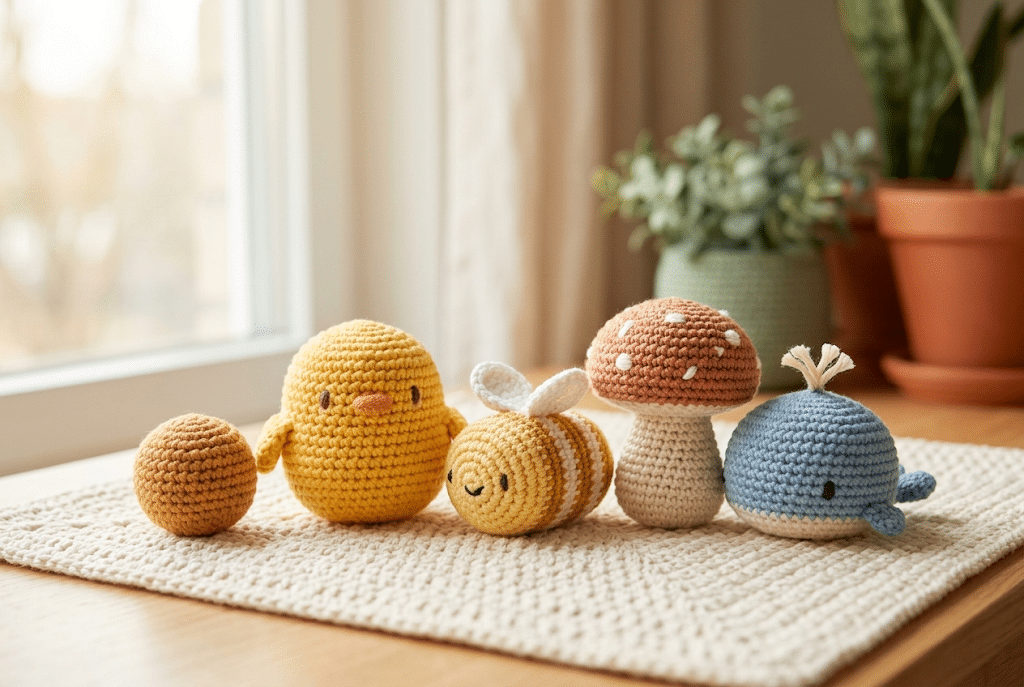
Some projects are much more beginner-friendly than others.
Look for designs based on simple rounded shapes.
Crochet Ball
A basic ball teaches you many essential skills, including increases, decreases, working in rounds, and stuffing.
Tiny Bee
A bee can be made from a simple oval body with stripes and small wings.
It’s a fun project for practicing color changes.
Simple Chick
A round yellow chick is another excellent first project.
Its basic shape makes it easier to focus on your stitches rather than complicated construction.
Small Mushroom
Mushrooms are often made from simple geometric shapes.
They are also a fun choice if you enjoy cute cottagecore-inspired designs.
Mini Whale
A small whale can introduce you to shaping while keeping the overall construction relatively simple.
Choose a pattern with minimal separate pieces for your first attempt.
Common Beginner Amigurumi Mistakes to Avoid
Everyone makes mistakes when learning.
The goal isn’t to avoid every mistake. It’s to understand what went wrong and keep practicing.
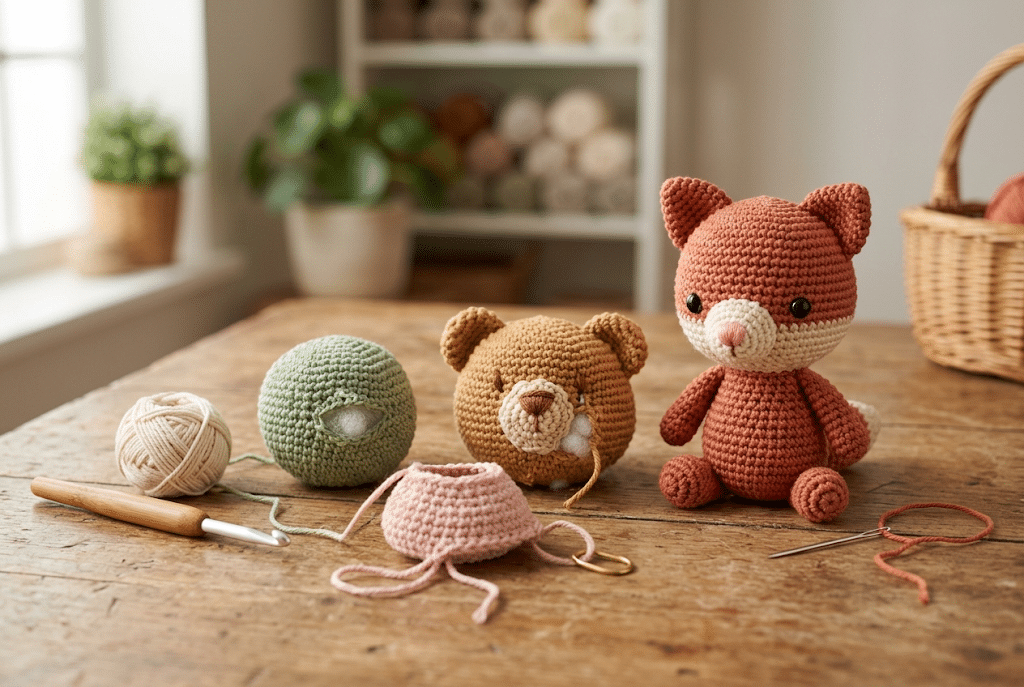
Using a Hook That’s Too Large
A large hook can create loose stitches.
That may leave visible gaps where the stuffing can escape.
If your pattern recommends a smaller hook, don’t automatically use the size printed on the yarn label.
Crocheting Too Loosely
Loose tension is another common problem.
Try to keep your stitches firm and consistent.
However, don’t grip your hook so tightly that your hands become uncomfortable.
Losing Track of Your Rounds
It is easy to forget where a round starts.
Use a stitch marker to mark the first stitch or beginning of each round.
This simple habit can save you a lot of frustration.
Overstuffing
More stuffing doesn’t always mean a better result.
Too much stuffing can stretch the stitches and make the finished piece look lumpy.
Add small amounts gradually and shape the project with your fingers.
Sewing Pieces on Unevenly
Take your time when attaching ears, legs, wings, or other parts.
Use pins first if needed.
Move the pieces around until you’re happy with their position before sewing them permanently.
Choosing a Difficult Pattern First
It can be tempting to choose the cutest complicated character you see.
However, starting with a simple project can build your confidence much faster.
Choose a pattern that teaches you one or two new skills at a time.
Amigurumi for Beginners: How to Improve Faster
The fastest way to improve is to practice regularly.
You don’t need to crochet for hours every day.
Even 15 or 20 minutes of focused practice can help.
Try repeating the same basic shapes several times.
For example, make a few small balls using different yarns. Then try an oval, followed by a simple animal.
You’ll quickly begin to understand how increases and decreases change the shape.
It’s also helpful to keep your first projects.
Instead of throwing away your early attempts, save them.
A few months later, you’ll be surprised by how much your stitches have improved.
Frequently Asked Questions About Amigurumi
Q: What is amigurumi made from?
A: Amigurumi is usually made from yarn, most commonly cotton or acrylic yarn. The crocheted or knitted pieces are usually filled with polyester fiberfill.
Q: Is amigurumi difficult for beginners?
A: No. Many amigurumi patterns are designed specifically for beginners. Start with simple shapes and learn single crochet, increases, decreases, and the magic ring.
Q: Is amigurumi the same as crochet?
A: Not exactly. Crochet is a broad craft technique, while amigurumi refers to crocheted or knitted stuffed objects. Most modern amigurumi is crocheted.
Q: What crochet hook should I use for amigurumi?
A: Use the hook size recommended by your pattern. Amigurumi often uses a smaller hook to create tight stitches and prevent stuffing from showing.
Q: What is the easiest amigurumi project for a beginner?
A: Simple balls, chicks, bees, mushrooms, and basic animals are excellent choices. Look for patterns with few separate pieces and simple shaping.
Final Thoughts: Start Small and Have Fun
Now that you’ve learned the basics, you can see why amigurumi has become such a popular part of the crochet world.
It combines simple stitches with creative shaping, giving you the chance to turn a ball of yarn into something adorable.
You don’t need perfect tension. You don’t need expensive supplies. And you certainly don’t need to be an expert crocheter.
Start with one small project.
Learn the magic ring. Practice single crochet. Try a few increases and decreases. Then give yourself permission to make mistakes.
Before long, you’ll be creating your own little collection of handmade animals and characters.
Ready to pick up your hook?
Browse beginner-friendly free amigurumi patterns, discover helpful crochet tutorials, and find your next adorable project to make.
Happy crocheting!